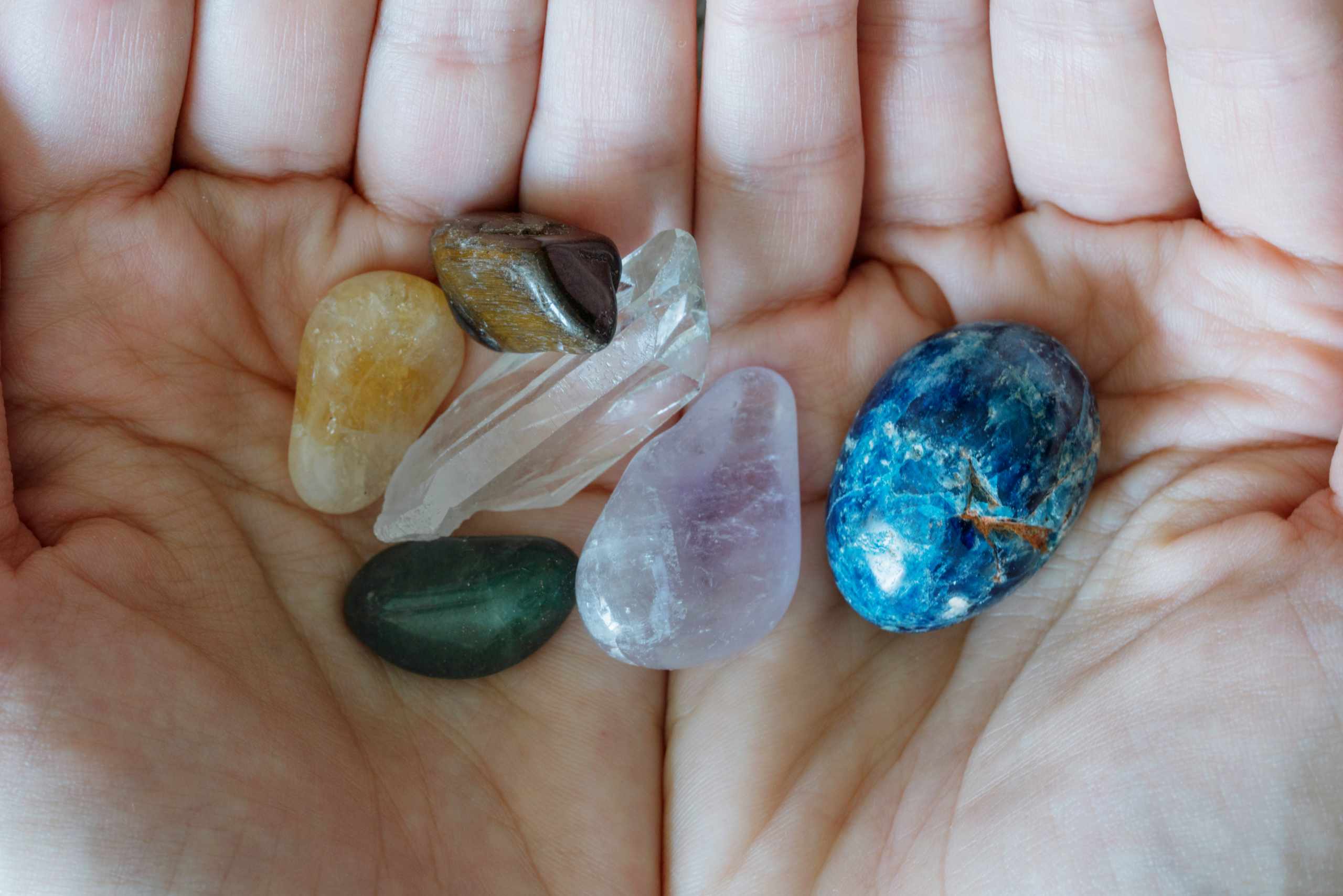
Put a blue gemstone on a white display tray and you may think of sapphire right away. Put a green one next to it and you may think of emerald. That seems reasonable, but it’s not enough to identify the gems accurately. Many natural minerals, lab-created gemstones, treated stones, and imitations have a similar visible color. Color is helpful evidence, but it is only one small piece of what needs to be observed.
Even the word “blue” is vague. Some gemstones have a violet-blue or greenish-blue color, some are light or dark in tone, some are weak or strong in saturation, and some show even, girdle-concentrated, or clearly zoned distribution. Two stones that seem similar to the naked eye may look very different when you carefully document the above features under a neutral light source. Intense colored lighting in the room may make color differences harder to see, so viewing conditions matter.
Some blue stones will be transparent and vitreous while others will be translucent and have a softer surface luster. The appearance of a cut stone may also be affected by its proportions, inclusions, or the pattern of light return through the pavilion. So, apparent color depends not only on the material, but also on the cut, lighting, surface quality, and internal characteristics.
A good exercise is to take two or three gemstones and try to describe them without attempting to guess what they are. Under a neutral daylight lamp, describe their hue, tone, saturation, transparency, luster, and any visible color zoning. Then turn the stones slowly with your tweezers and watch if the color changes near the table, crown, or girdle. Once you have written down your observations, then go back and consider possible gem identities and/or examine reference specimens.
A 10x loupe will give you more information that color alone doesn’t tell you. Start at the surface and observe for abrasions, chips, polish lines, dirt, or scratches. Then look inside the stone for inclusions, fractures, curved features, or reflections. None of these are necessarily proof that a stone is natural, treated, or a particular gemstone type, but they are clues that need to be interpreted in light of the other data collected.
In your gemstone notes, keep observation and interpretation distinct. The observation “dark green with uneven zoning and a fracture reaching the surface” is different from the interpretation “this has to be an emerald.” To arrive at a solid identification, you may need a refractive index, polariscope, dichroscope, or specific gravity measurement, and possibly a professional gem testing laboratory.
A better objective to aim for early on is not to immediately identify all your stones correctly. Instead, aim to replace hasty color guesses with precise descriptions and thoughtful questions. If you can describe precisely what you are seeing, what you are unsure of, and what further tests could help clarify your observations, your gemstone observations are becoming more accurate.